Category: News

  • Poor Air Quality Could Be Depriving You a Goodnight Sleep

    Poor Air Quality Could Be Depriving You a Goodnight Sleep

    A new scientific body of evidence reports that poor air quality could be robbing you a good night sleep. The study findings that were presented at Walter E. Washington Convention Center indicate that individuals who were exposed to high levels of air pollution were at a greater risk of reporting poor sleep quality as compared to individuals residing in areas free of air pollutants.

    Effect of Poor Sleep Quality On Health

    Previous studies on air quality have associated air pollution with both heart and breathing systems conditions. According to Dr. Martha E. Billings, the principal investigator of the study, lack of adequate sleep over a long period of time has the potential of degenerating into serious medical conditions.

    Where Does The New Finding Leave Us?

    Most sleep apnea researchers agree that more robust studies need to be conducted for causal-effect linkage to be established. The DSM Solutions team observe that a correlation study like the one conducted by Dr. Billings can’t zero down on the main mechanism interplays of poor air quality and sleep deprivation. Nevertheless, a number of plausible explanations exist. The lead investigator postulates air pollution irritates the airways and the brain centers that control sleep and breathing patterns. Given that mechanism, we may find air pollution to contribute to sleep apnea. DSM Solutions hope to remain on top of any further studies to continue to support your practice in being the best, most up-to-date sleep apnea dentistry team.

  • Dentists the Best for Treating Sleep-Related Breathing Disorders

    Dentists the Best for Treating Sleep-Related Breathing Disorders

    Dr. Nicole Greenman of DSM Solutions defines sleep-related breathing disorders as a group of conditions that affect your breathing pattern while you sleep. It’s a wide spectrum of condition ranging from upper airway resistance syndrome to snoring to obstructive sleep apnea.

    American Dental Association Policy on Treating Breathing-Related Sleep Disorders

    The House of Delegates for the American Dental Association (ADA) formally acknowledged that dentists are the only qualified medical personnel to provide intervention therapies for sleep-related breathing conditions.

    In the policy statement, the role of dentists was clearly outlined in relation to managing sleep-related breathing disorders. Key among the services expected of sleep apnea dentists were:

    • Patient assessments for the risk of developing sleep-related breathing problems
    • Providing referral linkages of the affected patient to specialists
    • Monitoring and evaluating the suitability of intervention devices such as continuous positive airway pressure and oral appliance therapy as prescribed by a physician.

    Health risk associated with Breathing-Related Sleep Disorders

    By adopting the policy statement, the House of Delegates reaffirmed the central role of dentistry in treating these breathing disorders. Other than affecting patient’s quality of life, unattended to sleep-related breathing disorders can result in serious medical complications, including cardiovascular and neurobehavioral injuries. Growth and development in infants and children might be hindered by these breathing disorders as well. Because of these reasons, the DSM sleep apnea dentistry team offers training to help your practice address this problematic variety of conditions for your patients.

  • Neural Circuits in Mice Point to Sleep Apnea Relief

    Neural Circuits in Mice Point to Sleep Apnea Relief

    We at DSM Solutions are here to stay up to date on the latest medical findings related to sleep apnea so that you can be an informed an effective dentist at treating it and related disorders. New findings by medical researchers that have been able to pinpoint a particular style of neural circuitry that arouses mice brains simulating sleep apnea conditions. These findings could result in new methods and medicines that assist patients with obstructive sleep apnea in increasing the amount of sleep they can get at night.

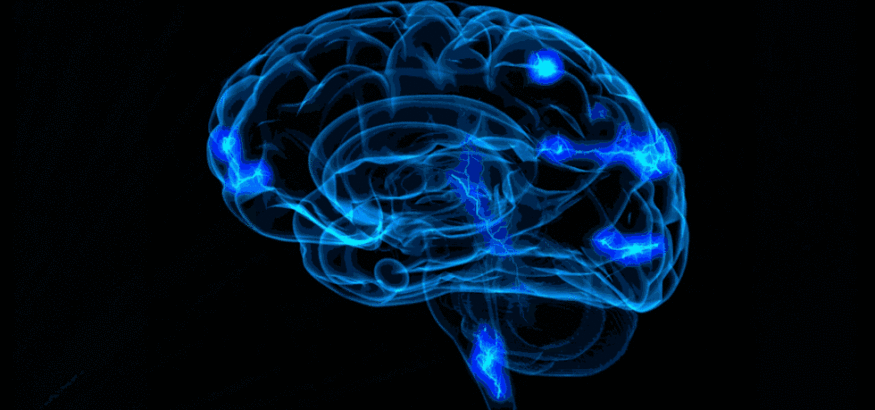
    Because of the breathing cycle that takes place and the changes in the oxygen and carbon dioxide levels in the blood, the brain provides an alert to the person sleeping right in time to re-establish their breathing. This cycle repeats itself multiple times during the night, so the person with sleep apnea is prevented from getting the necessary deep sleep that they need. They often have no memory this by the morning time.

    Saper, a Professor of Neurology and Neuroscience at Harvard Medical School stated that “If we could keep the brain from waking up during sleep apneas episodes and only activate that one part of the brain that open up the airways, those with sleep apnea would be able to get a good night’s sleep.”

    After additional experiments were made, Saper and colleagues concluded that there needs to be a drug that has the ability to reduce the wake-up responses while altering the opening of the airways during the process. The intent is to prevent people with sleep apnea from waking up during the night so that they will be fully rested by morning. The Drs. Greenman and the rest of the team hope developments and further tests can be conducted so that you as a sleep apnea dentist can eventually provide patients the even more accessible form of relief they deserve.

  • Dental Sleep Medicine (DSM) Conference: Research Trends Emerge

    Dental Sleep Medicine (DSM) Conference: Research Trends Emerge

    The American Academy of Dental Sleep Medicine (AADSM) hosted the Academy’s 26th Annual Meeting on June 2nd through June 4th, 2017 in Boston, Massachusetts. The gathering, attended by more 1,200 professionals including both sleep medicine professionals and dentists, honored the winners of the 2017 AADSM Research Award. Guest speakers gave a number of interesting presentations on advances in oral appliances.

    Research Trend 1: Predicting Oral Appliance Therapy Outcomes

    The University of Sydney’s Dr. Kate Sutherland, Ph.D. presented her abstract as the Academy’s keynote speaker. Dr. Sutherland’s research focuses on obstructive sleep apnea, or OSA. Her goal is to help the sleep medicine community recognize the heterogeneity of the condition with an eye toward better recognizing and treating OSA in patients.

    In her research, Dr. Sutherland has looked at the expressions of OSA, in particular obesity and certain features of the skull, that are risk factors for OSA. She uses imaging tools as well as clinically applicable surrogates. Her goal is to be able to identify those clinical features which will predict the individual patient’s outcome in using therapies other than continuous positive airway pressure (CPAP), in particular oral appliances.

    Other researchers have looked into sleep medicine’s ability to predict patient outcomes with oral appliance therapy. These researches include Maysaa Khojah, BDS, MS, who won an AADSM Clinical Research Award. Dr. Khojah’s results showed significant correlation between the patient’s facial anatomy and the patient’s outcome with regard to oral appliances.

    Additional abstracts presented at the meeting looked at the correlations between oral appliance therapy outcomes and physical features that included the following:

    • Aerodynamics of the upper airway
    • Body Mass Index (BMI)
    • Dental anatomy
    • Neck circumference
    • Weight

    Researchers from each of these investigative teams gave the caveat that further research is needed into which physical characteristics can be used by sleep medicine professionals to predict patient success with oral appliance therapy.

    Research Trend 2: Advances in Screening and Follow-Ups

    Patient screenings were another trending topic at the 2017 AADSM Annual Meeting. Presenters talked about screening for sleep-disordered breathing, assessing the patient’s quality of life after successfully reducing the apnea hypopnea index with oral appliance therapy, and timing the follow-ups to polysomnography.

    Kristin Dillow, RDH, MS took home the AADSM’s prestigious Clinical Research Excellence Award for her work. She researched the screening tool used for sleep-disordered breathing. Dr. Dillow made comparisons on the suitability of the 2008 version of the scoring criteria versus the updating 2016 scoring criteria. She showed that the 2016 scoring criteria have significantly improved the exactness of the instrument.

    Research Trend 3: Extended Use Studies

    The AADSM Annual Meeting 2017’s third research trend looking back over the almost 30 years of the field of sleep and delved into the long-term consequences of oral appliance therapy. Two winners of AADSM Research Awards looked at dental movement in instances of long-term oral appliance therapy.

    Mona Hamoda, BDS, MSc, MHSc won the Student Excellence Award for her abstract. The average treatment time in Dr. Hamoda’s study was 12.6 years, making hers the longest patient follow-up research on record. Dr. Hamoda and her team found no significant skeletal changes correlated with oral appliance therapy. However, the research of Julia Uniken Venema, BsC, DMD showed that oral appliance therapy can cause significant dental changes, especially dental occlusion, over a decade.

    Both award-winning abstracts demonstrate that follow-up by knowledgeable dentists is critical in the long-term use of oral appliance therapies. Further research is needed.


  • Insurance Coverage for Sleep Apnea Devices

    Insurance Coverage for Sleep Apnea Devices

    Question: Does medical insurance cover oral devices? If so, which ones?
    Answer: Many insurance plans cover devices that meet certain criteria. They must be FDA approved, custom-made, and placed and monitored by a dentist. There are more than 100 FDA-approved oral care devices.

    Question: How can I know if my insurance covers oral devices and how much of the cost it covers?
    Answer: Policies vary. Call your insurance provider or ask your dentist to call. A benefit estimator will know if your plan includes coverage though he or she may not know how much it covers.

    Question: Does medical insurance pay for anti-snoring devices?
    Answer: No. Covered devices must be medically necessary, custom made, and fitted by a dentist to ensure that you receive the best care. When snoring stops, you may still have sleep apnea episodes. Your dentist and physician should cooperate to manage your sleep apnea.